
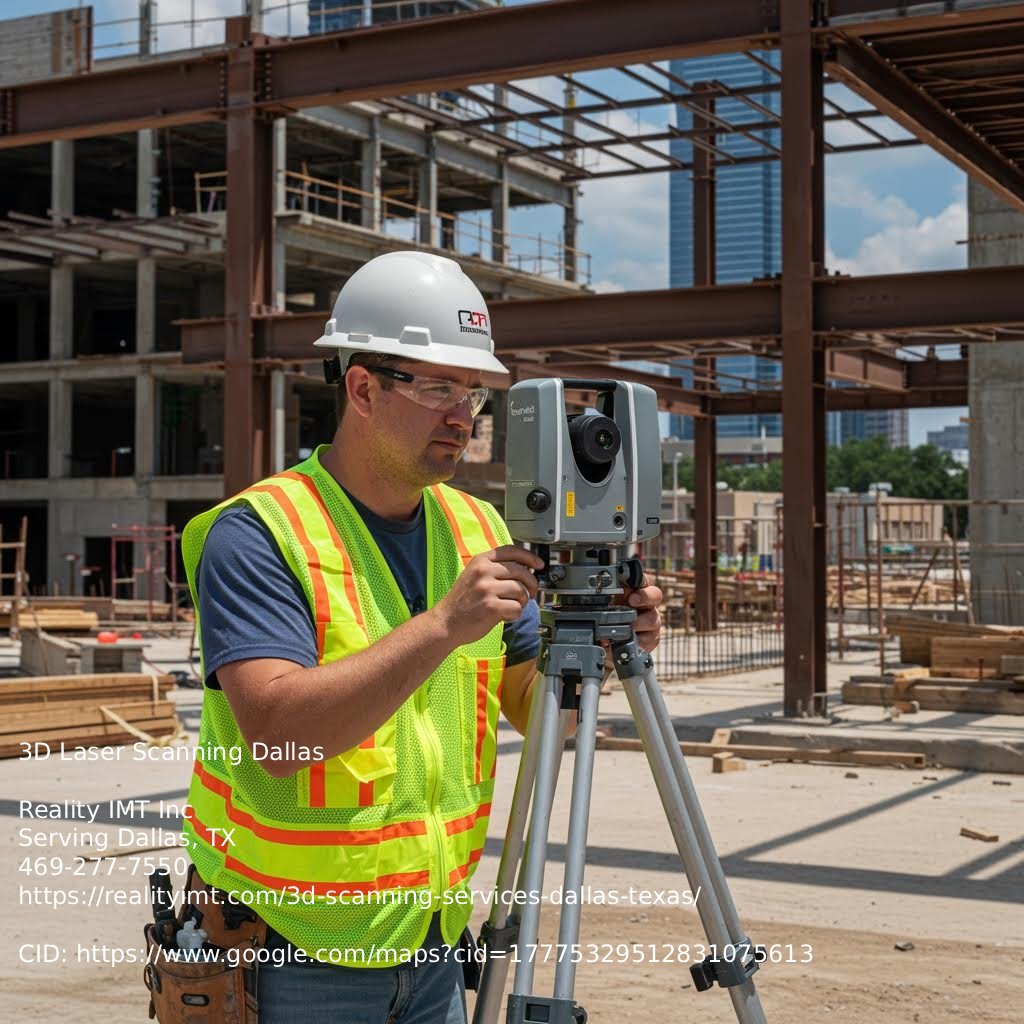
Terrestrial laser scanners capture high-accuracy 3D site data. These devices use LiDAR to record millions of spatial points in minutes, mapping buildings, equipment, and structures. In Dallas projects, teams often use them to document existing conditions before renovation. Scanners differ in range, resolution, and speed, but for AutoCAD, clean and aligned point clouds matter most. The right scanner improves file quality and saves time. Poor setup or equipment creates noisy data, which slows down modeling.
Point clouds are raw outputs from laser scans—a dense set of X, Y, Z coordinates. Each point marks a surface in 3D space, forming a digital version of the site. For AutoCAD, point clouds need cleaning, alignment, and sometimes segmentation. Large files slow things down, so trimming early helps. Misaligned or incomplete scans lead to skewed models.
Registration combines multiple scans into one coordinate system. It’s needed for large or complex spaces with many scan positions. Even small errors here cause big problems in AutoCAD models. Software like Leica Cyclone or Autodesk ReCap can help, but scan overlap and reference points must be accurate. Skipping this step leads to drawings that don’t match real-world spaces.
Common point cloud formats for CAD include RCP/RCS, E57, LAS/LAZ, and sometimes PTS or XYZ. Each has pros and cons for compatibility, size, and metadata. RCP works well with Autodesk tools and usually avoids conversion. Still, teams often convert from E57 or LAS when switching platforms. Picking the wrong format wastes time or causes data loss.
Once the point cloud is in AutoCAD or Revit, the next step is to extract geometry—walls, floors, pipes, and more. This can be manual or semi-automated, depending on the tool and scan quality. In Dallas scans, this step turns raw data into usable models. Engineers and architects use it to create 2D plans or 3D designs. If the cloud is too sparse or messy, modeling turns into guesswork, which defeats the purpose of scanning.
Before working with 3D scan data in AutoCAD, you need an accurate scan. That starts with solid fieldwork. In Dallas, most commercial projects use terrestrial LiDAR systems to collect millions of data points from interiors, facades, and mechanical spaces. Tight areas or active job sites need careful planning to avoid occlusions—spots the scanner can’t reach.
Then process the data. Software like Autodesk ReCap or Cyclone exports the cleaned point cloud into AutoCAD-friendly formats like RCP, RCS, or DWG. For 3D work, you can trace the scan or build solid geometry in Revit or AutoCAD 3D. The goal? Usable CAD files that match real-world dimensions.
Next comes registration. This step aligns multiple scans into one coordinate system. Some teams use targets or spheres. Others use cloud-to-cloud algorithms. Either way, errors over 5mm can throw off the model, especially in renovation projects where precision counts.
Now check the quality. Look for gaps, misalignments, or noise from glass or shiny surfaces. Most teams filter stray points and reduce density before moving forward.
Skip a step, and you risk bad drawings, missed site details, and costly rework. Prep work matters. Here’s why.

After you scan in 3D, the next step is turning that point cloud into something usable in AutoCAD—usually DWG or DXF files. This part can get tricky. The scan may contain millions of points, and dumping all of them into AutoCAD without cleanup can create a massive, slow file. You need to reduce the data smartly—keep detail where it matters, simplify where it doesn’t.
Start by importing the point cloud into software that supports classification and alignment, like Recap or Cyclone. From there, clip the cloud, isolate sections, and tag them. If you're working with MEP systems, tag piping, ductwork, and conduit separately so you can export them to different layers in AutoCAD. Do the same for beams and columns. Avoid dumping everything into one layer—it slows your workflow later.
Don’t skip annotations. When converting scan data into a DWG, add notes or dimensions directly in the drawing. This helps if the model will be used for renovation or coordination. Use consistent layer names and color codes. Disorganized layers make large projects harder to manage.
Watch your file size. Use regioning, limit how many point clouds you load, and convert only what you need. Skip full 3D modeling if a 2D section works. Here is why: it saves time and keeps your files easier to handle.
After capturing the 3D laser scan data, the next step is turning that point cloud into usable AutoCAD files. This gets technical fast. You’re not just opening a scan and tracing it. There’s a process. The scan data—often in formats like .rcp, .e57, or .las—needs registration and cleanup. Then it’s modeled manually or semi-automatically into 2D drawings or 3D models, depending on project needs.
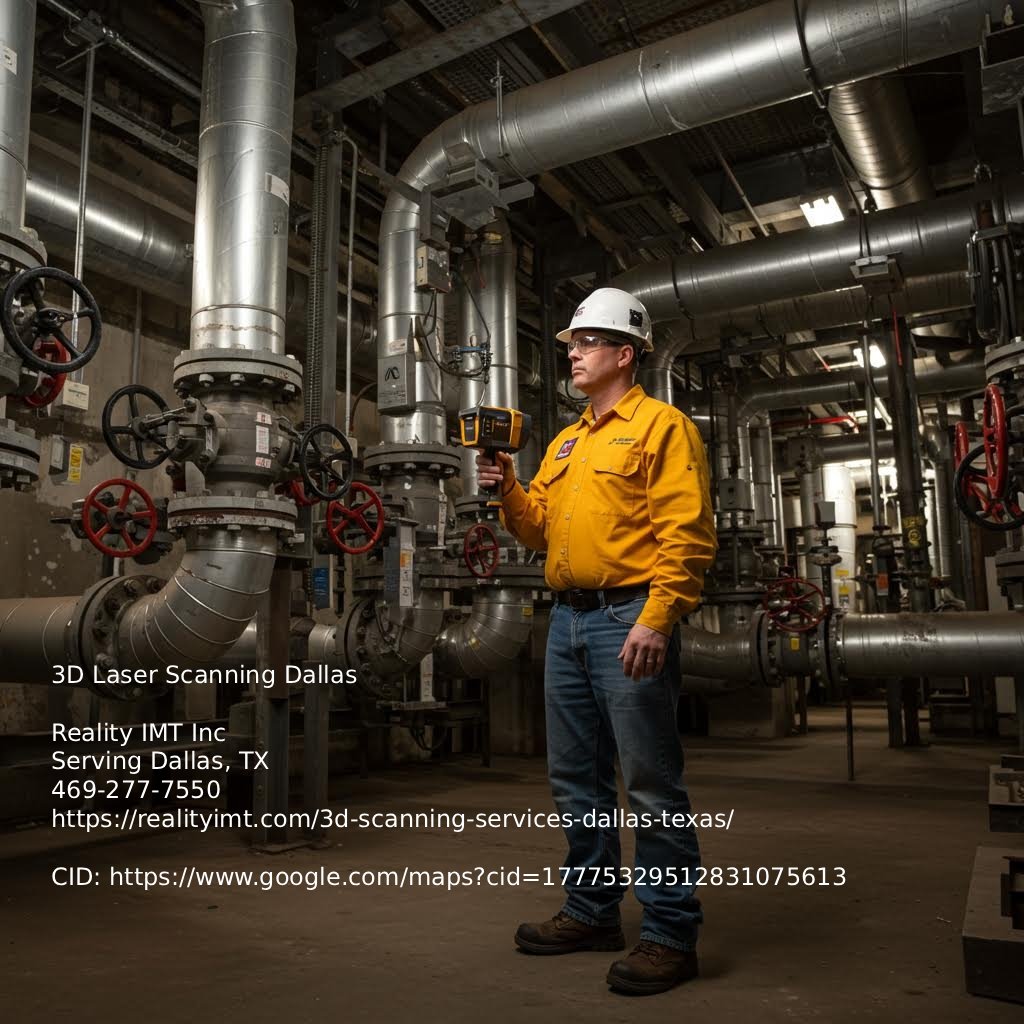
In Dallas, teams often use this to create as-built drawings for MEP systems, structural framing, and architectural layouts. Picture a commercial building renovation with no accurate drawings. You scan the space, build a 3D model in AutoCAD, and now you have a solid base to coordinate ductwork, piping, or electrical runs without hitting existing beams or walls. It’s also used in managing facilities like plants, hospitals, and data centers, where accurate layouts help with upgrades or retrofits.
Here’s where people slip up: thinking scan-to-CAD is fully automated. It’s not. You need technicians who know both scanning and CAD. Skipping QA is another problem. If the point cloud isn’t registered correctly or the modeler misreads the geometry, the AutoCAD files won’t match real conditions. That leads to delays, rework, or extra costs.
When done right, these CAD files plug into BIM platforms for coordination. They also help create floor plans, elevations, and sections with real-world accuracy. Here is why it matters: it replaces guesswork with measurable data.
When you're working with 3D laser scans in Dallas and need to bring that data into AutoCAD, start by converting point clouds into usable file formats. Most scanning services deliver data in formats like RCP/RCS (for Autodesk Recap), LAS, or E57. You need to register these files—align and merge them—before using them in AutoCAD. Poor registration leads to inaccurate drawings, which messes up everything later, especially for MEP coordination or structural updates.
Autodesk Recap helps prep point clouds. It handles scan registration and removes noise before import. Inside AutoCAD, plugins like Leica CloudWorx or ClearEdge3D’s EdgeWise can speed things up. CloudWorx slices point clouds, creates sections, and extracts geometry faster than native tools. EdgeWise goes further by auto-extracting features like walls, pipes, and ducts into solid CAD geometry. Still, you need to check and fix the output. Auto-extraction can miss the mark if your scan is messy or low quality.
If you're on a tight schedule—like general contractors or facility managers—a clean DWG or Revit file from scan data can save weeks. But only if the scan is processed right. Always run quality checks. Misaligned scans or bad cropping can cause problems later, especially in BIM coordination or clash detection.
Here’s the takeaway: use the right tools, know what they do, and double-check your work. Scanning is quick, but turning it into solid AutoCAD files takes more than hitting “export.”
When scanning historic buildings in Dallas, creating native AutoCAD files directly from point cloud data saves time. Architects and engineers working on renovations or reuse projects need accurate as-built drawings before they can start designing. Without solid documentation, teams might design around wrong dimensions or miss structural elements. That drives up costs later.
Here’s why. A restoration company working on a 1920s hotel downtown used 3D laser scanning to capture the full interior, including ornate ceilings and irregular walls. Within days, they had precise 2D floor plans and elevation drawings in DWG format. Their design team overlaid proposed changes in AutoCAD without guessing or redrawing.
In another case, a mechanical contractor upgrading HVAC systems in a century-old courthouse used scan data to build 3D AutoCAD models of the ductwork and framing. This helped them plan new layouts without hitting old beams or tight ceiling spaces. Manual measuring would’ve taken weeks and missed details.
These AutoCAD files help more than just architects. Facility managers use them to plan maintenance. MEP engineers check for clashes. Real estate developers use them to understand what they’re buying.
The takeaway? Work with scanning teams who know how to process point clouds well. If the registration is off or the scan resolution is low, the DWG files won’t be accurate. That leads to delays, redesigns, and higher costs. Get it right from the start.
When 3D laser scans become AutoCAD files, you get more than a visual—you get a technical base ready for design, coordination, and documentation. For architects and engineers, that means less time spent measuring or redrawing. In Dallas projects with tight schedules and limited site access, a DWG file from a scan cuts down on visits and rework.
Let’s break it down. Laser scans capture millions of data points. When converted into 2D plans or 3D models in AutoCAD, the measurements often come within a few millimeters of actual conditions. That kind of precision helps avoid problems later—especially in renovation or retrofit work where nothing is square or predictable. One missed beam or crooked wall can delay weeks of progress. Scans help spot those issues early.
Costs drop when you reduce rework and change orders. Teams move faster when they don’t wait on updated as-builts or second site visits. Here is why the scan-to-CAD step matters. If the scan data isn’t clean or aligned before drafting, the drawings won’t be accurate. It’s not just about having the scan—it’s about how it gets turned into usable AutoCAD geometry. That’s where the scanning team’s experience makes a difference.
If you need 3D laser scans to create AutoCAD files, the scan quality matters as much as the drawing. Not all providers can deliver clean, CAD-ready data. First, ask what type of scanner they use. Do they use terrestrial laser scanners with millimeter accuracy? Or handheld units with limited range and resolution? That choice affects your linework.
Next, check their experience. Ask how many projects they’ve done like yours—commercial buildings, industrial plants, or historical sites. Someone who’s only scanned homes may not be right for a 500,000 sq ft facility with complex MEP systems. Review their portfolio. Have they turned point cloud data into usable AutoCAD files? Ask for samples. DWG exports should be clear, labeled, and layered—not just a mess of lines.
Then, ask about post-processing. Scanning is only the start. They need to register the data, clean up noise, align scans, and convert it into accurate 2D plans or 3D models for AutoCAD. If they can’t explain that, move on. Also, confirm they deliver the file format you need. Some only send PDFs or generic 3D models.
Dallas has many scanning vendors, but only a few can deliver AutoCAD files that work for architects and engineers. Choose carefully. It’ll save you time and fixes later.